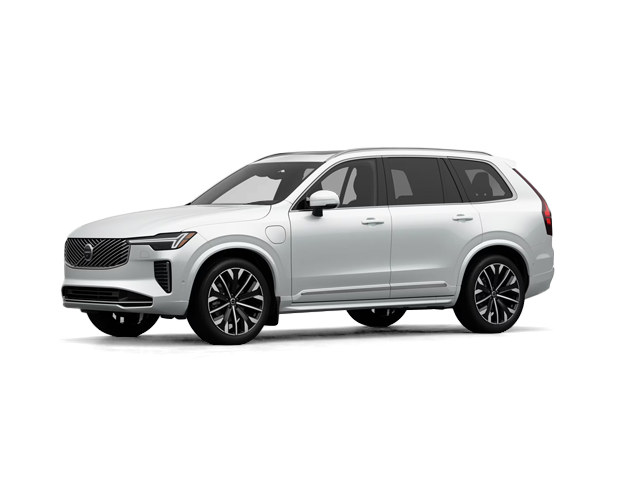
Photo for illustrative purposes only.
Find out moreVolvo Cars Villa

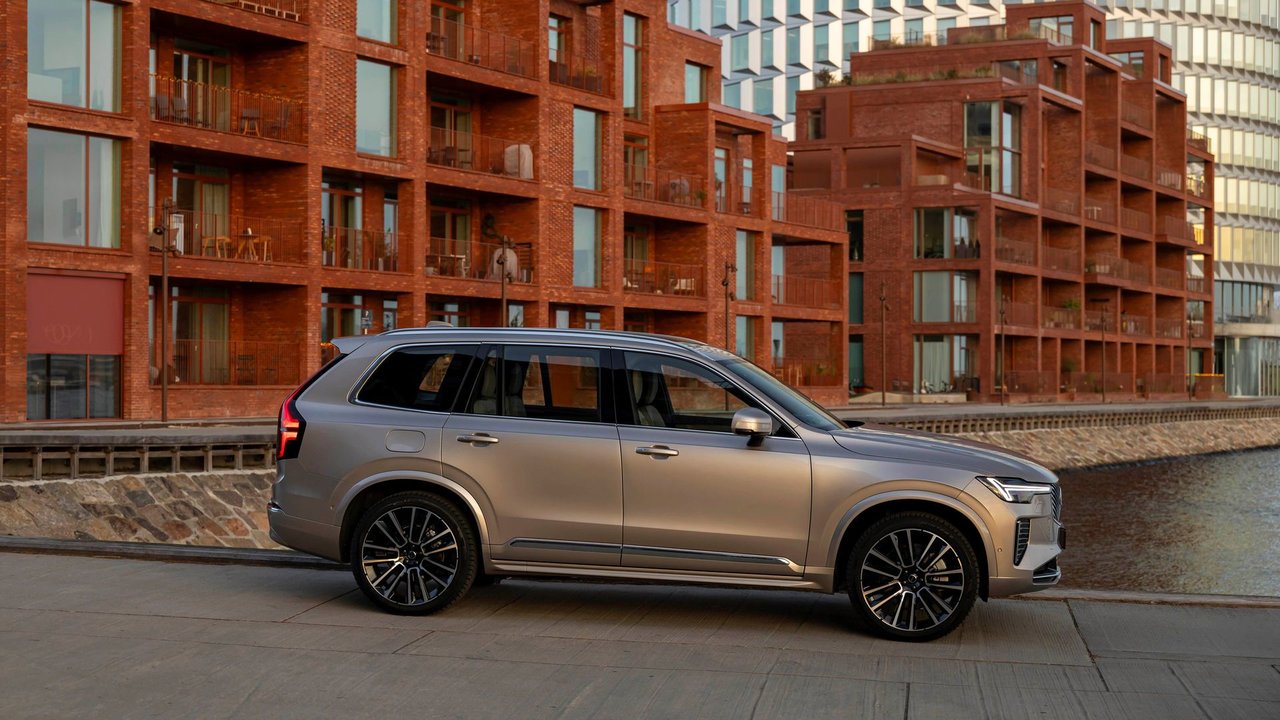
A three-row family SUV has a lot of jobs: school runs, airport trips, the occasional road trip to a cottage. The XC90 T8 adds one more variable to that mix, an electric motor working alongside the gas engine. Here’s what that actually changes day to day.
The T8 is the plug-in hybrid version of the XC90, sitting alongside the mild-hybrid B6 AWD in the lineup. Where the B6 pairs a turbocharged and supercharged 2.0 L four-cylinder with a small integrated starter generator, the T8 pairs a turbocharged 2.0 L four-cylinder engine with a more substantial electric motor and an 18.8 kWh battery (14.7 kWh usable).
Both versions send power through an 8-speed automatic transmission to all four wheels. The difference is that the T8 can drive on electricity alone for real trips, not just brief coasting.
The gas engine in the T8 makes 312 hp on its own. The electric motor adds 143 hp and 228 lb-ft of torque, and combined, the system is rated at 455 hp and 523 lb-ft of torque. That combined torque figure matters more than it sounds: it’s available quickly, since the electric motor delivers its torque from a standstill while the turbocharged engine builds in.
In daily driving, the XC90 T8 leans on the electric motor first, for parking lot manoeuvres, stop-and-go traffic, and light acceleration. The gas engine steps in for highway speeds, hard acceleration, or once the battery’s usable charge is drawn down. The two work as one system rather than a driver-chosen switch for most trips.
The battery recharges from a home Level 2 charger in about 5 hours. Charging overnight means a driver can leave most mornings with a full charge and no engine cycles at all until the battery is spent.
The T8 is rated for 53 km of electric-only range. For an Ontario household doing school drop-off, groceries, and a commute inside that distance, a full charge can cover the whole day on electricity, with the gas engine staying off entirely.
Longer trips, highway merges past the city, or a weekend drive up north pull the gas engine back into the mix. That’s where the T8’s combined fuel economy comes in: 9.1 L/100 km city, 8.6 L/100 km highway, 8.9 L/100 km combined, plus a 3.8 Le/100 km combined rating factoring in electricity use. Compare that to the B6 AWD’s 11.5 / 9.0 / 10.4 L/100 km, and the gap shows why plugging in regularly changes the ownership math, not just the environmental one.
The T8 needs gasoline, and the recommended fuel is 95 RON, same as the B6. Running on lower-octane fuel isn’t part of the equation here; the turbocharged engine is tuned around that fuel grade.

The XC90 T8 doesn’t drive like a sport SUV chasing lap times, even though the numbers are quick: 0-100 km/h in 5.3 seconds and a 180 km/h top speed. That acceleration is there for confident highway merging and passing with a full load of passengers, not for chasing a stopwatch.
The extra weight of the battery and motor does show up somewhere: curb weight runs 2,306-2,335 kg on the T8 versus 2,106-2,136 kg on the B6. Cargo space stays close between the two. Behind the front seats, the T8 offers 1,941 L versus 1,950 L on the B6; behind the rear seats, it’s 977 L versus 980 L. The trade-off for the plug-in system is measured in a handful of litres, not a meaningfully smaller cargo hold.
Ground clearance holds at 223 mm on the standard chassis, and the double-wishbone front and integral-axle rear suspension are shared with the B6. All-wheel drive is standard, which matters through an Ontario winter where wet roads, early snow, and highway slush are part of the season regardless of powertrain.
Towing is the one area where the T8 gives something up: it’s rated for 750 kg unbraked and 2,250 kg braked, same braked figure as the B6, but worth noting for anyone thinking about a trailer alongside three rows of seating.
The T8 makes the most sense for a household with a driveway or garage where a Level 2 charger is realistic, and a daily routine, commute, school runs, errands, that mostly fits inside 53 km. That’s a common pattern in Ontario suburbs and smaller cities, where daily distances are short even if occasional trips are long.
For a family cross-shopping the mild-hybrid B6 against the T8, the decision comes down to charging access and how much of the daily driving genuinely happens at electric-only distances. A driver who can plug in most nights gets meaningfully lower fuel use and quieter daily trips. A driver without reliable home charging access gets less benefit from the T8’s added complexity and weight, and the B6’s simpler mild-hybrid setup covers the same three-row, all-wheel-drive family duties.
The XC90 T8 pairs a 2.0 L turbocharged engine with an electric motor for a combined 455 hp, 53 km of electric range, and AWD across every trim. It’s built for households that can charge at home and want most daily driving to happen on electricity.
Visit Volvo Cars Villa in Thornhill to talk through home charging setup, drive modes, and how the T8 fits your family’s routine before booking a test drive.
Photo for illustrative purposes only.
Find out more
2026 Volvo XC40: What Are the Powertrains Offered?
Ontario driving asks a lot of a compact luxury SUV: highway commutes, tight downtown parking, gravel cottage roads, and everything between. The...
Read more
Is BLIS Standard on Every 2026 Volvo XC60 Trim?
Comparing 2026 Volvo XC60 trims can feel like reading a spreadsheet instead of shopping for an SUV. Ontario buyers usually land on one question...
Read more
More Power: What the 2026 Volvo XC60 Polestar Engineered Adds
Shopping the XC60 lineup in Ontario often comes down to one question: how much performance do you actually want layered on top of a plug-in hybrid...
Read morePowered and developed by