2026 Volvo XC40: What Are the Powertrains Offered?
Ontario driving asks a lot of a compact luxury SUV: highway commutes, tight downtown parking, gravel cottage roads, and everything between. The...
Read moreVolvo Cars Villa
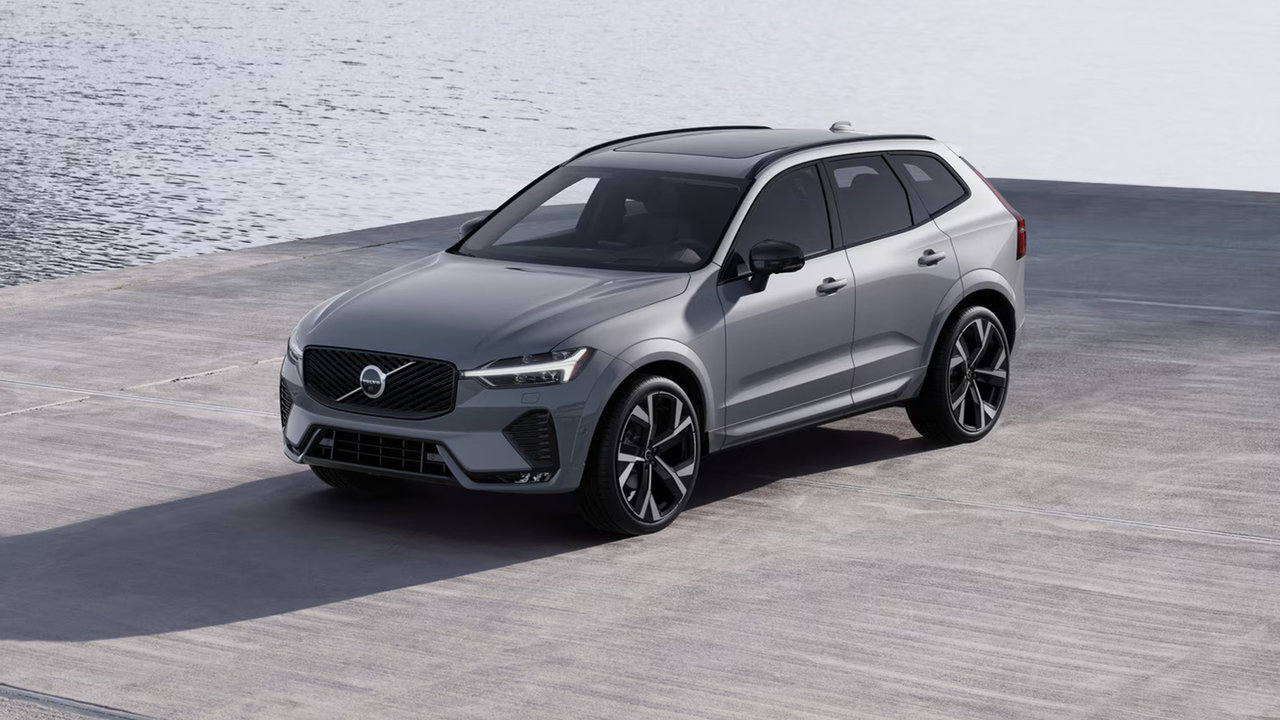
Choosing between the 2026 Volvo XC60 B5 and T8 isn’t about picking the “better” SUV. Both wear the same sheet metal and the same 2.0L turbocharged four-cylinder up front. What splits them is how you actually drive: your commute, your access to a charger, and how much you want the electric motor doing the work.
For Ontario shoppers cross-shopping these two, the real question is which powertrain matches your daily routine, not which one wins on a spec sheet.
|
Spec |
B5 Mild Hybrid |
T8 Plug-In Hybrid |
|
Engine |
1.969 L turbo I4 |
1.969 L turbo I4 with electric assist |
|
Horsepower |
247 hp |
455 hp combined (312 hp engine + 143 hp electric motor) |
|
Torque |
266 lb-ft |
523 lb-ft combined (295 lb-ft engine + 228 lb-ft electric motor) |
|
0-100 km/h |
6.9 s |
4.8 s |
|
Electric range |
None |
58 km |
|
Fuel economy, combined |
9.0 L/100km |
8.5 L/100km (3.5 Le/100km) |
|
Drivetrain |
AWD |
AWD |
|
Curb weight |
1,883 kg |
2,120 kg |
|
Ground clearance |
209 mm |
200 mm |
|
Cargo, seats folded |
965 L |
950 L |
|
Cargo, behind rear seats |
483 L |
468 L |
The B5 uses a 48-volt mild-hybrid system layered onto the turbo four-cylinder. That system doesn’t add a separate driving mode; it smooths out stop-start restarts and quietly supports the engine so the SUV feels settled around town. Output lands at 247 hp and 266 lb-ft, enough for confident highway merging without ever feeling strained.
The T8 takes a different approach. Its 312-hp engine pairs with a 143-hp electric motor for a combined 455 hp and 523 lb-ft of torque, and that torque arrives early, which is what makes the T8 feel noticeably quicker off the line. The numbers back it up: 4.8 seconds to 100 km/h against 6.9 seconds for the B5.
That gap matters less on a straight highway on-ramp and more in stop-and-go city driving, where the T8’s electric motor fills in instantly while the turbo engine is still catching up.

Both powertrains run on premium fuel with a 95 RON minimum, so neither one changes what you’re putting in the tank. Where they diverge is what happens before you get to the pump.
The T8 carries an 18.8 kWh battery (14.7 kWh usable) rated for 58 km of electric-only range, on a combined efficiency of 8.5 L/100km once the gas engine joins in, or 3.5 Le/100km when measuring electric-equivalent consumption. On a Level 2 home connector at 16 amps, a full charge takes about 5.0 hours, which fits comfortably into an overnight plug-in.
For a typical Ontario commute or school run under 58 km round trip, the T8 can realistically run the whole day without the engine firing. That advantage shrinks fast for anyone without home charging access, since the T8 without regular plugging in still drives, but leans on its heavier battery pack without the efficiency payoff.
The B5 skips all of that. There’s no plug, no cable, and no charging schedule to plan around. Its 9.0 L/100km combined rating comes purely from the mild-hybrid system’s efficiency tuning and start-stop smoothness, with no dependency on outside infrastructure.
The T8’s battery pack adds 237 kg of curb weight over the B5 (2,120 kg versus 1,883 kg), and that weight has to live somewhere. Cargo volume behind the rear seats comes in at 468 L for the T8 against 483 L for the B5, and with the seats folded it’s 950 L versus 965 L.
The difference is real but modest, a matter of gym bags and grocery runs, not a lost row of seating.
Ground clearance follows a similar pattern: 200 mm for the T8 against 209 mm for the B5. On paved commutes it’s a non-issue. On a gravel cottage road or a rutted winter driveway, that extra 9 mm on the B5 gives a small margin of comfort, though both SUVs share the same suspension geometry otherwise.
The added mass on the T8 also changes how the SUV settles into corners and how it brakes; heavier cars generally need more distance to stop and feel a touch less eager to change direction, even with the extra torque pulling them out of turns.
The B5 lineup runs Core, Plus, Ultra, and Black Edition Ultra. The T8 adds a fifth trim, Polestar Engineered, alongside the same Core, Plus, Ultra, and Black Edition Ultra names.
Ultra is the trim where the two powertrains start to feel closest in equipment: both get a head-up display, 360-degree camera, and an optional Bowers & Wilkins High Fidelity audio system. Polestar Engineered goes further on the T8 side, with the Bowers & Wilkins system standard rather than optional, a dedicated Polestar Engineered chassis tune, and available 22-inch forged wheels.
A quick side-by-side of what separates the two Ultra-level experiences:
If your daily driving is a short, predictable loop, home charging is set up in your garage, and you want the quickest SUV in the lineup, the T8’s 58 km of electric range and 4.8-second acceleration make it the more rewarding fit. That combination lets you cover most errands without the engine running at all, and still have 455 hp on tap for the highway.
If your routine involves longer highway stretches, no reliable place to plug in, or you’d simply rather not think about charging schedules, the B5’s mild-hybrid setup gives you 9.0 L/100km efficiency without asking anything of your driveway. It’s the simpler ownership path: fill up, drive, repeat.
For buyers weighing cottage or gravel-road trips, the B5’s 209 mm of ground clearance and lighter 1,883 kg curb weight offer a small edge in that specific scenario, while the T8 answers back with instant low-speed torque for loaded stops and starts around town.
The 2026 XC60 makes the same case in either form: a turbocharged four-cylinder, standard AWD, and a cabin built around the same materials and technology. The B5 and T8 simply split on how that power reaches the road and whether a plug is part of your routine.
Visit Volvo Cars Villa in Thornhill, Ontario, to drive the B5 and T8 back-to-back and see which powertrain matches the way you actually get around.
2026 Volvo XC40: What Are the Powertrains Offered?
Ontario driving asks a lot of a compact luxury SUV: highway commutes, tight downtown parking, gravel cottage roads, and everything between. The...
Read more
Is BLIS Standard on Every 2026 Volvo XC60 Trim?
Comparing 2026 Volvo XC60 trims can feel like reading a spreadsheet instead of shopping for an SUV. Ontario buyers usually land on one question...
Read more
More Power: What the 2026 Volvo XC60 Polestar Engineered Adds
Shopping the XC60 lineup in Ontario often comes down to one question: how much performance do you actually want layered on top of a plug-in hybrid...
Read morePowered and developed by