2026 Volvo XC40: What Are the Powertrains Offered?
Ontario driving asks a lot of a compact luxury SUV: highway commutes, tight downtown parking, gravel cottage roads, and everything between. The...
Read moreVolvo Cars Villa

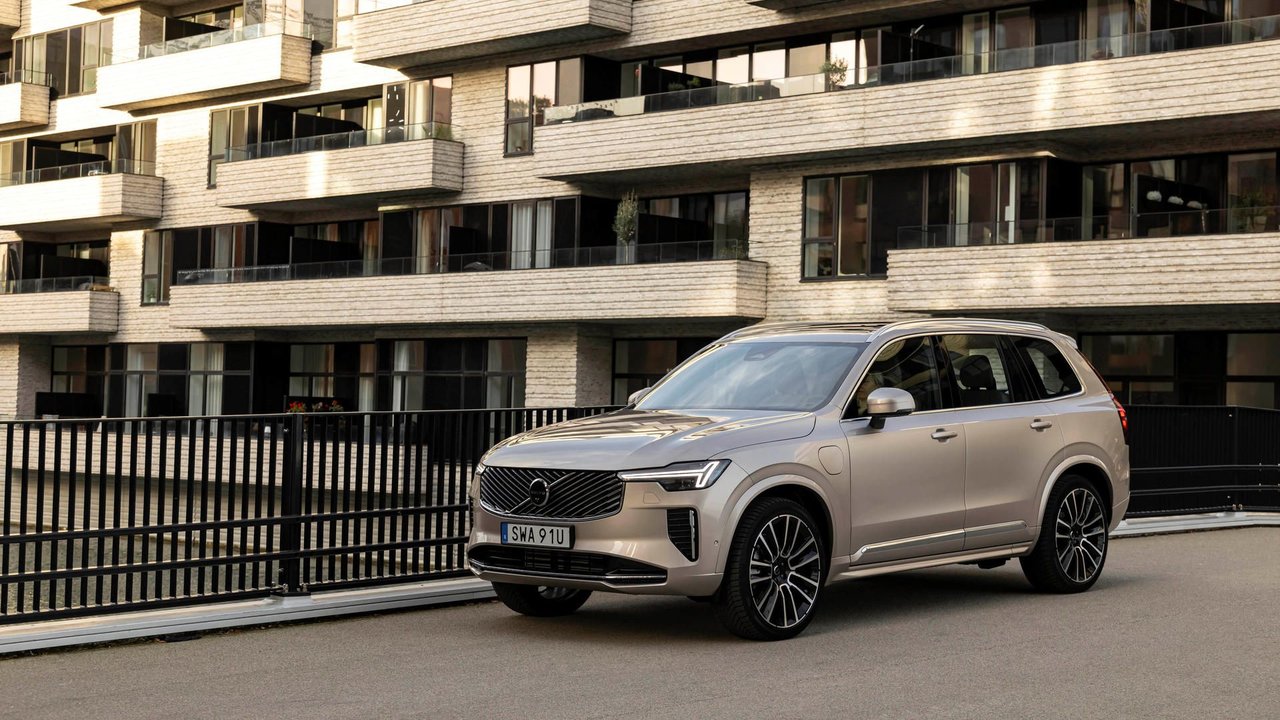
The 2026 Volvo XC90 offers two distinct electrified powertrains, each designed to meet different driving priorities. The B6 AWD uses a mild-hybrid system to enhance efficiency without changing your fuelling routine, while the T8 plug-in hybrid delivers substantial electric range and combined performance. Both powertrains share Volvo's commitment to safety, Scandinavian design, and all-wheel-drive capability, but the differences in output, fuel consumption, and daily usability make the choice between them significant. Understanding how each system works - and what it offers drivers in Ontario - helps you select the XC90 configuration that aligns with your commute, budget, and environmental goals.
This guide compares the B6 AWD and T8 plug-in hybrid variants across performance, efficiency, electric capability, and real-world practicality. Whether you prioritize smooth integration with existing refuelling habits or the flexibility of electric-only driving, the XC90 lineup provides options that suit diverse lifestyles.
|
Feature |
B6 AWD |
T8 Plug-In Hybrid |
|
Combined Output |
295 hp, 370 lb-ft |
455 hp, 523 lb-ft |
|
0 - 100 km/h |
6.7 seconds |
5.3 seconds |
|
Fuel Economy (Combined) |
10.4 L/100 km |
8.9 L/100 km |
|
Electric Range |
None |
53 km |
|
Battery Capacity |
None |
18.8 kWh |
|
Towing Capacity |
2,250 kg (4,961 lbs) |
2,250 kg (4,961 lbs) |
|
Curb Weight |
2,106 - 2,136 kg |
2,306 - 2,335 kg |
The B6 AWD uses a 2.0-litre turbocharged and supercharged four-cylinder engine paired with a 13 hp integrated starter generator. This mild-hybrid system recovers energy during braking and assists the engine during acceleration, reducing fuel consumption without requiring external charging. The engine produces 295 hp at 5,400 rpm and 370 lb-ft of torque between 2,100 and 4,800 rpm, routed through an eight-speed automatic transmission to all four wheels.
The T8 plug-in hybrid combines a 2.0-litre turbocharged four-cylinder engine with an electric motor mounted on the rear axle. The gasoline engine delivers 312 hp at 6,000 rpm and 295 lb-ft of torque between 3,000 and 5,400 rpm, while the electric motor contributes 143 hp at 15,500 rpm and 228 lb-ft from 0 to 3,280 rpm. Combined output reaches 455 hp and 523 lb-ft, managed through an eight-speed automatic transmission. The 18.8 kWh lithium-ion battery is mounted centrally in the vehicle's tunnel, providing 53 km of electric-only range and enabling three distinct drive modes: Pure (electric only), Hybrid (automatic blending), and Power (maximum performance).
The T8 plug-in hybrid accelerates from 0 to 100 km/h in 5.3 seconds, 1.4 seconds quicker than the B6 AWD's 6.7-second time. This difference stems from the electric motor's instant torque delivery, which supplements the gasoline engine during full-throttle acceleration. Both powertrains share a 180 km/h electronically limited top speed and identical towing capacity of 2,250 kg (4,961 lbs), ensuring the T8's added performance does not compromise utility.
The B6 AWD provides linear, predictable power delivery suited to highway merging and steady-speed cruising. The T8's electric motor enables more aggressive acceleration from standstill and low-speed manoeuvres, with the combined 523 lb-ft of torque available across a broader rpm range.

The B6 AWD achieves 11.5 L/100 km in city driving, 9.0 L/100 km on highways, and 10.4 L/100 km combined. The mild-hybrid system reduces fuel consumption during stop-and-go traffic by shutting off the engine at idle and restarting it smoothly when the driver releases the brake pedal.
The T8 plug-in hybrid delivers 9.1 L/100 km in city conditions, 8.6 L/100 km on highways, and 8.9 L/100 km combined when operating in hybrid mode. In electric-only mode, the T8 achieves 3.8 L/100 km combined equivalent. The 53 km electric range covers typical daily commutes without using gasoline, and the 71-litre fuel tank provides extended range for longer trips. Charging the 18.8 kWh battery takes approximately 5 hours using a Level 2 charger at 16 amps, 7 hours at lower amperage, or 12 hours from a standard household outlet.
The B6 AWD requires no changes to fuelling habits or home infrastructure. Drivers refuel at standard gasoline stations, and the mild-hybrid system operates automatically without driver input. This powertrain suits buyers who prioritize simplicity and want electrification benefits without adapting their routine.
The T8 plug-in hybrid rewards drivers with access to home charging or workplace infrastructure. A full charge each evening enables gasoline-free commuting for most Ontario drivers, while the hybrid mode ensures range continuity on longer trips. The T8's flexibility allows drivers to maximize electric use when convenient and rely on the gasoline engine when charging is unavailable.
The T8 plug-in hybrid's battery and electric motor add 170 - 199 kg compared to the B6 AWD, increasing curb weight from 2,106 - 2,136 kg to 2,306 - 2,335 kg. Both powertrains maintain identical exterior dimensions: 4,953 mm in length, 2,140 mm in width (including mirrors), and a 2,984 mm wheelbase. Ground clearance remains 223 mm with standard suspension or 212 - 252 mm with optional air suspension.
Cargo volume differs slightly due to the T8's battery placement. The B6 AWD offers 1,950 litres with all seats folded, while the T8 provides 1,941 litres. With the second-row seats upright, the B6 AWD offers 980 litres and the T8 provides 977 litres. Both configurations accommodate seven passengers across three rows, with identical legroom, headroom, and hip room measurements.
Both powertrains use double wishbone front suspension and an integral rear axle with a transverse composite leaf spring. Hydraulic shock absorbers and stabilizer bars are standard, with optional air suspension available for adjustable ride height and improved comfort. Electric power-assisted rack-and-pinion steering provides a 15.8:1 ratio and a turning circle of 11.8 - 12.1 metres curb-to-curb.
Braking systems are identical: 366 mm front discs and 345 mm rear discs with antilock braking, electronic brake distribution, and electronic brake assistance. Both powertrains achieve a 36-metre braking distance from 100 km/h to a complete stop.
The B6 AWD suits drivers who want electrification benefits without altering their fuelling routine. It delivers strong performance, competitive fuel economy, and full towing capability without requiring home charging infrastructure. This powertrain appeals to buyers prioritizing simplicity and long-distance range flexibility.
The T8 plug-in hybrid rewards drivers with regular access to charging and shorter daily commutes. The 53 km electric range eliminates gasoline consumption for most weekday driving, while the hybrid mode ensures range confidence on road trips. The T8's 455 hp combined output and 5.3-second 0 - 100 km/h time provide a noticeable performance advantage over the B6 AWD, making it the choice for buyers who value both efficiency and acceleration.
The 2026 Volvo XC90's dual powertrain strategy offers clear choices for drivers in Ontario. The B6 AWD delivers mild-hybrid efficiency without changing your routine, while the T8 plug-in hybrid provides electric range and substantial performance for those ready to integrate charging into their daily schedule.
2026 Volvo XC40: What Are the Powertrains Offered?
Ontario driving asks a lot of a compact luxury SUV: highway commutes, tight downtown parking, gravel cottage roads, and everything between. The...
Read more
Is BLIS Standard on Every 2026 Volvo XC60 Trim?
Comparing 2026 Volvo XC60 trims can feel like reading a spreadsheet instead of shopping for an SUV. Ontario buyers usually land on one question...
Read more
More Power: What the 2026 Volvo XC60 Polestar Engineered Adds
Shopping the XC60 lineup in Ontario often comes down to one question: how much performance do you actually want layered on top of a plug-in hybrid...
Read morePowered and developed by